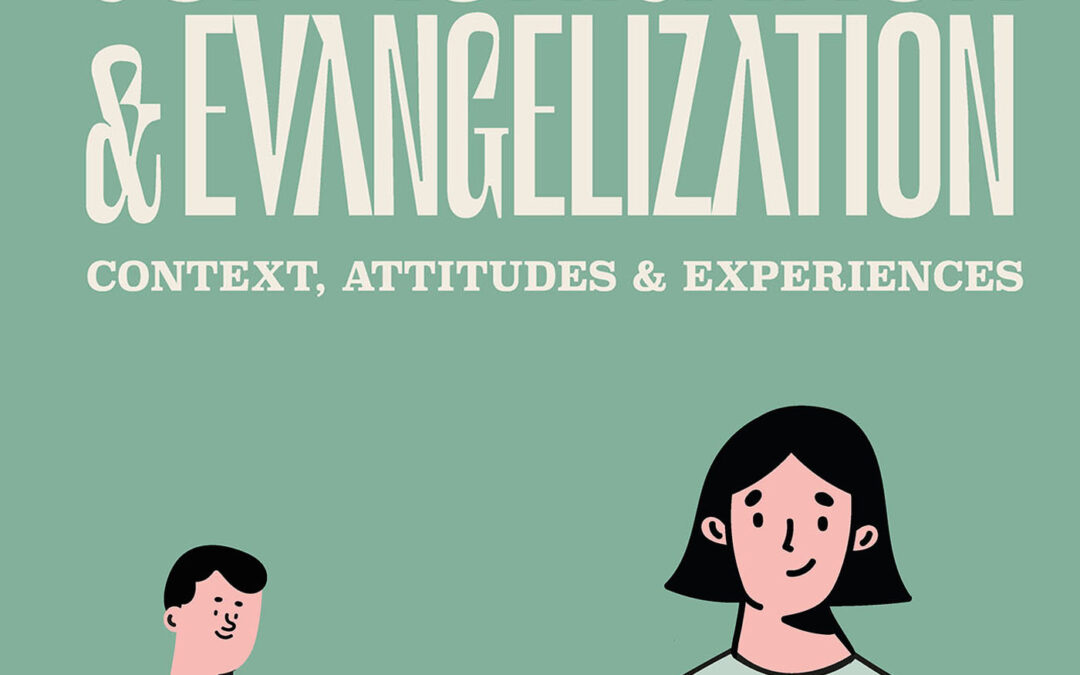
Church Communication Creative Strategies for Promoting Cultural Change
Daniel Arasa, Cristian Mendoza, Sergio Tapia-Velasco (a cura di)
Editore: EDUSC 2016
ISBN: 978-88-8333-553-2
Pagine: 580 pp.
Prezzo Libro: 25.00 €
Prezzo Ebook: 3.99 €

Every true culture is also a creative culture, which generates ideas that can change the world. Throughout history and across cultures, Christianity, through its faith in a personal God (not in a mere organizer of the world), has known how to value human reason and the potentialities inherent in human nature.
The fact that man can establish a personal relationship with God has always produced revolutionary changes in culture and in social life. Men from every walk of life are henceforth directed towards the path of the good, the true, and the beautiful. It’s a path found today in the media, an essential element of each of our lives and a privileged path to take.
The Ninth Professional Seminar on the Communication Offices of the Church entitled, “Church Communication: Creative Strategies for Promoting Culture Change”, aims to offer positive experiences and criteria for debating and communicating the faith in the public sphere. When the Gospel is incarnated into lifestyles, ideas, and cultures, it possesses a creative force that is capable of changing the world. The challenge for the Church communicator is to shed light upon the allure of this innovative force in the various folds of a secular and plural society.
“The profession of communicators and media technology allow us to reach very far and deep inside the human heart, where important decisions are made (…). Similar to the creative word of God, communicators- with a single word- can create or recreate an image of reality. Plus, modern technology globalizes and stimulates the power of speech. The fascinating and powerful action and influence of the media in society and culture is evidence. They can help you grow or disorient. They can recreate many things, informing us about the reality to help us in the discernment of our options and decisions; or instead, they can create virtual simulations, fantasies and fiction that move us toward viable options. (…) The media are now the main tools for the creation of Culture” (J.M. Bergoglio).

Daniel Arasa is Associate Professor of Digital and Strategic Communications at Santa Croce. He studied Journalism at the Universitat Autònoma de Barcelona and in the Southern Methodist University (Dallas). He is author of “Church Communications Through Diocesan Websites. A Model of Analysis” (2008), and co-editor of “Religious Internet Communication. Facts, Experiences and Trends in the Catholic Church” (2010).
Rev. Cristian Mendoza teaches Church Finances at Santa Croce. Since 2006, he is member of the University Promotion and Development Department and serves as a liaison in Rome for various foundations and sponsoring associations around the world. He is incardinated in the Prelature of Opus Dei.
Rev. Sergio Tapia-Velasco was ordained priest for the Prelature of Opus Dei in 1998. He has been working in the formation of priests & seminarians in Rome since then. In 2003 he started teaching Public Speaking & Media Training at Santa Croce. His fields of research are Philosophy of Language, Conversation and Dialogue; New Religious Movements and Preaching.

Vedi nella stessa Collana: Atti e convegni

Altre Pubblicazioni

Il diritto canonico in prospettiva storica

Il diritto canonico in prospettiva storica

Che senso ha studiare la storia del diritto canonico, se questa disciplina è eminentemente pratica e orientata a rendere possibile la giustizia oggi, mediante l’applicazione delle leggi attualmente in vigore? I quattro Autori di questo volume riconoscono nella storia...

The invisible God in christian art

The invisible God in christian art

The ‘pictorial turn’ in our culture is having a powerful impact on the way ideas are communicated. This phenomenon may inspire art historians, theologians and communication professionals. For centuries, the magnificent architectural and artistic works commissioned by...

Autonomia e libertà

Autonomia e libertà

L’intento di questo libro è mettere in luce il valore essenziale della libertà in ogni ambito dell’esistenza umana. La libertà si presenta come un bene unico nella sua irripetibile singolarità, un bene inestimabile per il quale innumerevoli uomini e popoli hanno...

Nel Dedalo del desiderio

Nel Dedalo del desiderio

Viviamo in un tempo in cui il desiderio, forza profonda dell’essere umano, è al centro di nuove sfide. La tecnologia, i social network e le dinamiche del consumo ne amplificano la potenza ma spesso ne distorcono il senso. Questo volume, frutto del lavoro...

Eritis mihi testes (At 1,8)

Eritis mihi testes (At 1,8)

I contributi racchiusi nel volume non sono soltanto un segno di omaggio all’Amico, al Collega, al Maestro, al Vescovo ma anche un modo per mettere a fuoco una varietà di elementi che si intrecciano con quei saperi che hanno permesso alla Chiesa del Vaticano II di fare...

Un semplice e umile lavoratore nella vigna del Signore

Un semplice e umile lavoratore nella vigna del Signore

L’Istituto Teologico “Pio XI” della Diocesi di Ventimiglia – San Remo, nell’occasione dei vent’anni dell’elezione pontificia di Joseph Ratzinger – Benedetto XVI, ha promosso un congresso internazionale – tenutosi dall’1 al 3 maggio 2025 – sulla figura e il pensiero...

La speranza del Regno

La speranza del Regno

Davanti alle crisi sociali ed ecclesiali, si rischia la tentazione di ridurre la spiritualità a una versione privata e intimista, dove il credente si preoccupa soltanto del suo dialogo con Dio e del suo camminare verso il cielo, di salvare se stesso e i propri cari....

Comunicazione, Etica e opinione pubblica

Comunicazione, Etica e opinione pubblica

Questo volume raccoglie una serie di contributi dedicati al professor Norberto González Gaitano, come riconoscimento alla sua ampia e feconda attività didattica, di ricerca e istituzionale nel campo della comunicazione. Nel corso di oltre quarant'anni, il suo percorso...

L’Opera di Dio

L’Opera di Dio

Un celebre pensiero di Blaise Pascal dice: «Il cuore ha le sue ragioni che la ragione non conosce». Per scrivere un poema nel XXI secolo, nel pieno di due guerre che rischiano di coinvolgere nuove parti in lotta, lasciando deflagrare Europa e Medio-Oriente, dinanzi...

Corpus Christi et Vicarius Christi

Corpus Christi et Vicarius Christi

Il papato rinascimentale è stato oggetto di un’ampia e consolidata produzione storiografica, che ne ha esplorato i molteplici aspetti politici, culturali e istituzionali. Manca tuttavia, in questo panorama, uno studio sistematico sul rapporto tra papato ed eucaristia....